
CVE-2026-41089: Critical Windows Netlogon RCE Flaw Now Actively Exploited
A critical Windows Netlogon remote code execution flaw is now being actively weaponized in the wild, three weeks after Microsoft shipped the patch. CVE-2026-41089, carrying a near-perfect CVSS score of 9.8, allows unauthenticated attackers to seize full SYSTEM-level control of any unpatched Windows domain controller by sending a single malicious network request. Belgium’s national cybersecurity authority confirmed the active exploitation on Friday and issued an emergency warning to administrators worldwide. For Canadian organizations running Active Directory environments, which includes the majority of enterprise, government, and mid-market IT infrastructure in the country, this is a patch-now situation with no acceptable delay.
What Is CVE-2026-41089 and Why Is It Dangerous
CVE-2026-41089 is a stack-based buffer overflow vulnerability in the Windows Netlogon service, the core component of Active Directory that manages domain authentication, trust relationships, and secure channel operations between Windows clients and domain controllers. Microsoft disclosed and patched the flaw on May 12, 2026, as part of its monthly Patch Tuesday release, which addressed 118 vulnerabilities in total, 16 of which were rated critical.
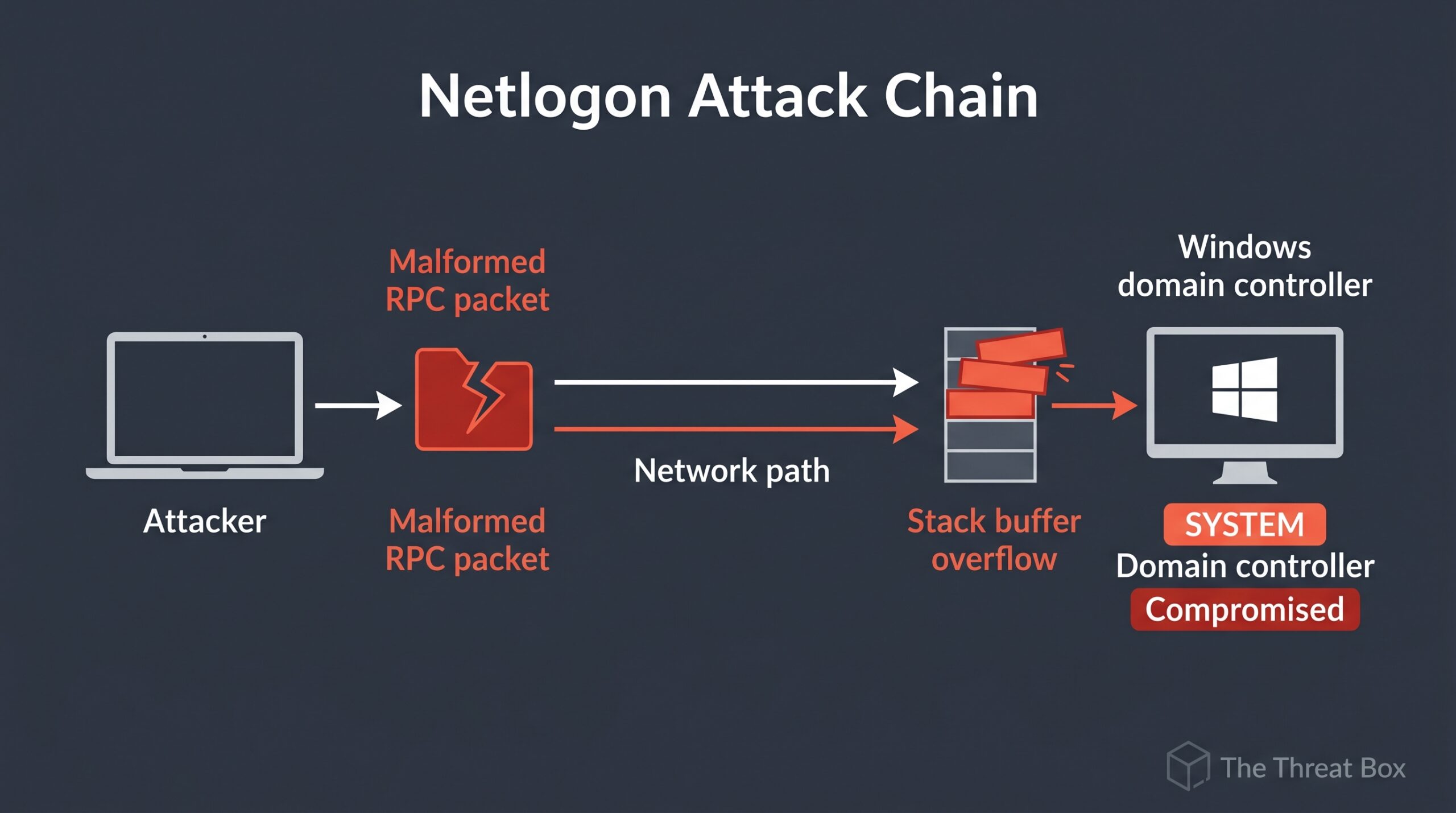
The reason this particular flaw sits at the top of every administrator’s emergency list is the combination of what it does and how little it takes to exploit it. An attacker requires only network reachability to a domain controller’s Netlogon service. From there, a specially crafted Remote Procedure Call (RPC) packet sent to the vulnerable system triggers improper input handling inside the service, resulting in arbitrary code execution at the SYSTEM privilege level. No credentials, no user interaction, and no prior access to the target environment are required.
This attack class is known as a zero-click, pre-authentication exploit, and it represents the most direct path to complete domain takeover available to an adversary. A compromised domain controller gives an attacker the ability to create accounts, extract credentials, access every connected system, and persist undetected across the environment.
How the Flaw Works Technically
The vulnerability resides specifically in how the Netlogon service processes incoming authentication requests through the NetrServerAuthenticate3 RPC function. Inadequate input validation in this function allows a malformed network packet to overflow a stack buffer, redirecting execution flow to attacker-controlled code. Because the Netlogon service operates with SYSTEM-level privileges, any successful exploit immediately grants the attacker the highest available permission tier on the compromised domain controller.
Microsoft initially assessed the flaw as “less likely” to be exploited at the time of patch release, a classification that security professionals familiar with Netlogon’s history immediately questioned. That assessment has now been overtaken by real-world events.
Active Exploitation Confirmed: The CCB Warning
On May 29, 2026, the Centre for Cybersecurity Belgium (CCB), the country’s national cybersecurity authority, updated its advisory with a direct exploitation warning. The CCB stated that CVE-2026-41089 was being actively exploited in the wild and directed administrators to patch as quickly as possible. Belgium’s team noted that successful exploitation could lead to full remote code execution and urged organizations to treat this as a top-priority emergency remediation item.
At time of publication, CCB had not disclosed technical details about the observed attacks, including attribution or specific targets. Microsoft had not updated its own advisory to reflect the confirmed exploitation, and the company had not responded to media requests for a public statement.
Industry expert Jason Kikta, CTO at Automox, offered clear operational guidance when the patch was first released: patch every domain controller in the same maintenance window, because “half-patched forests are not a defensible state for a pre-auth domain controller bug.” He further advised enforcing MFA on administrative sessions, restricting Netlogon traffic at the network layer, and actively monitoring for anomalous domain controller RPC activity.
A Familiar Threat Vector: The Shadow of Zerologon
Security professionals have drawn immediate comparisons between CVE-2026-41089 and Zerologon (CVE-2020-1472), a Netlogon privilege escalation vulnerability that became one of the most devastating enterprise vulnerabilities in recent memory. Zerologon exploited a cryptographic weakness in the Netlogon authentication handshake and was weaponized by nation-state threat actors and ransomware groups within two weeks of its public disclosure. The attack surface is essentially identical: any network-reachable domain controller.
CVE-2026-41089 differs technically, exploiting a memory corruption issue rather than a cryptographic weakness, but the operational impact and exploitation pathway are structurally similar. The historical speed with which Netlogon vulnerabilities have been adopted into threat actor toolkits should inform every organization’s urgency here.
Canadian Impact: Federal, Provincial, and Private Sector Risk
The majority of Canadian enterprise and government IT infrastructure runs on Windows Server with Active Directory at its core. Federal departments, provincial governments, healthcare authorities, universities, financial institutions, and businesses of all sizes rely on domain controllers to underpin user authentication, access control, and network trust.
A successful exploit of CVE-2026-41089 against any of these environments would give an attacker the ability to dump domain credentials, move laterally without restriction, create persistent administrative access, and potentially disable security tools that depend on the same infrastructure. In healthcare and financial sectors, such access could directly expose protected personal and financial data, triggering reporting obligations under PIPEDA and sector-specific regulations.
The Canadian Centre for Cyber Security (CCCS) has consistently placed Active Directory and domain controller security among its highest-priority advisories for Canadian organizations. The CCCS’s guidance on Windows patching cadence and domain controller hardening applies directly to this situation. Organizations that have not yet applied the May 2026 Patch Tuesday updates to their domain controllers are operating with a known-exploited critical vulnerability in one of the most sensitive components of their infrastructure.
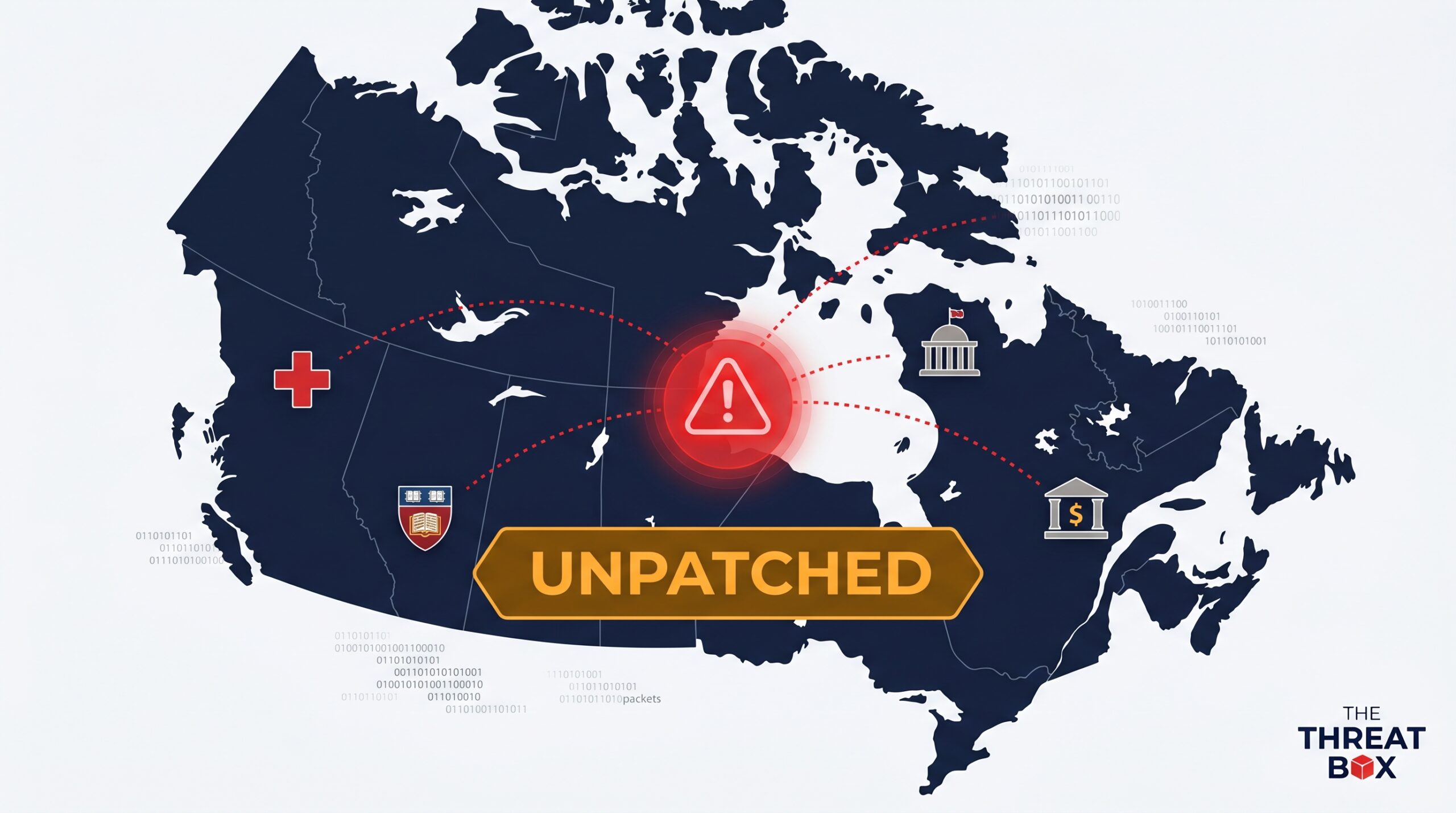
Canadian small and medium businesses managing their own Windows environments through internal IT staff or MSPs should treat this as an emergency patch cycle, not a scheduled maintenance item. MSPs serving Canadian clients should validate patch status across their entire client base immediately.
All Supported Windows Server Versions Are Affected
CVE-2026-41089 affects every currently supported Windows Server release, from Windows Server 2012 onward through the latest Windows Server 2025. There is no version of Windows Server in active support that is inherently protected without applying the May 2026 patch. Organizations running older, out-of-support Windows Server versions should treat their environment as fully compromised from a risk posture standpoint and prioritize upgrading or isolating those systems immediately.
Key Takeaways
- CVE-2026-41089 is a CVSS 9.8 stack-based buffer overflow in the Windows Netlogon service, now confirmed under active exploitation in the wild.
- The vulnerability requires zero credentials, zero user interaction, and only network access to a domain controller, making it a zero-click, pre-authentication attack.
- Successful exploitation grants full SYSTEM-level code execution on a domain controller, enabling complete Active Directory domain takeover.
- Belgium’s Centre for Cybersecurity (CCB) confirmed active exploitation on May 29, 2026, and issued an urgent patch advisory. Microsoft had originally classified the flaw as “less likely” to be exploited.
- All supported Windows Server versions (2012 through 2025) are vulnerable. The patch was released on May 12, 2026, as part of Patch Tuesday.
- The flaw echoes the severity and exploitation pattern of Zerologon (CVE-2020-1472), which was weaponized within two weeks of disclosure by nation-state actors and ransomware groups.
- Canadian organizations in government, healthcare, finance, and education relying on Active Directory environments are directly at risk under PIPEDA accountability requirements if a domain controller compromise leads to personal data exposure.
What You Should Do Now
- Apply the May 2026 Patch Tuesday updates immediately to all domain controllers in your environment. Do not wait for your next scheduled maintenance window. Patch all domain controllers in the same cycle to eliminate partial-forest exposure.
- Audit your Windows Server inventory to confirm every domain controller is accounted for and verify patch installation status via your patch management platform. Pay special attention to legacy or branch-office systems that may be out of cycle.
- Restrict Netlogon RPC traffic at the network layer so that only authorized systems and services can reach domain controllers over Netlogon-related ports. Review and tighten firewall rules and network segmentation around all domain controller infrastructure.
- Enable enhanced monitoring for Netlogon and Active Directory events, specifically watching for unexpected service crashes or restarts, unusual authentication volumes, new administrative account creation, and anomalous RPC traffic patterns on domain controllers.
- Enforce MFA on all administrative and domain admin sessions to reduce the lateral impact if an attacker does gain initial access through another vector in the same environment.
- Check with your MSP or IT provider if you outsource Windows infrastructure management to confirm that domain controllers in your environment have received the May 12 patch and are protected against CVE-2026-41089.
- Review your incident response plan for a domain controller compromise scenario. If a domain controller in your environment is running an unpatched build and was network-accessible during the exploitation window, treat it as potentially compromised and initiate investigation procedures.