Anthropic AI Export Ban: US Forces Fable 5 and Mythos 5 Offline Worldwide
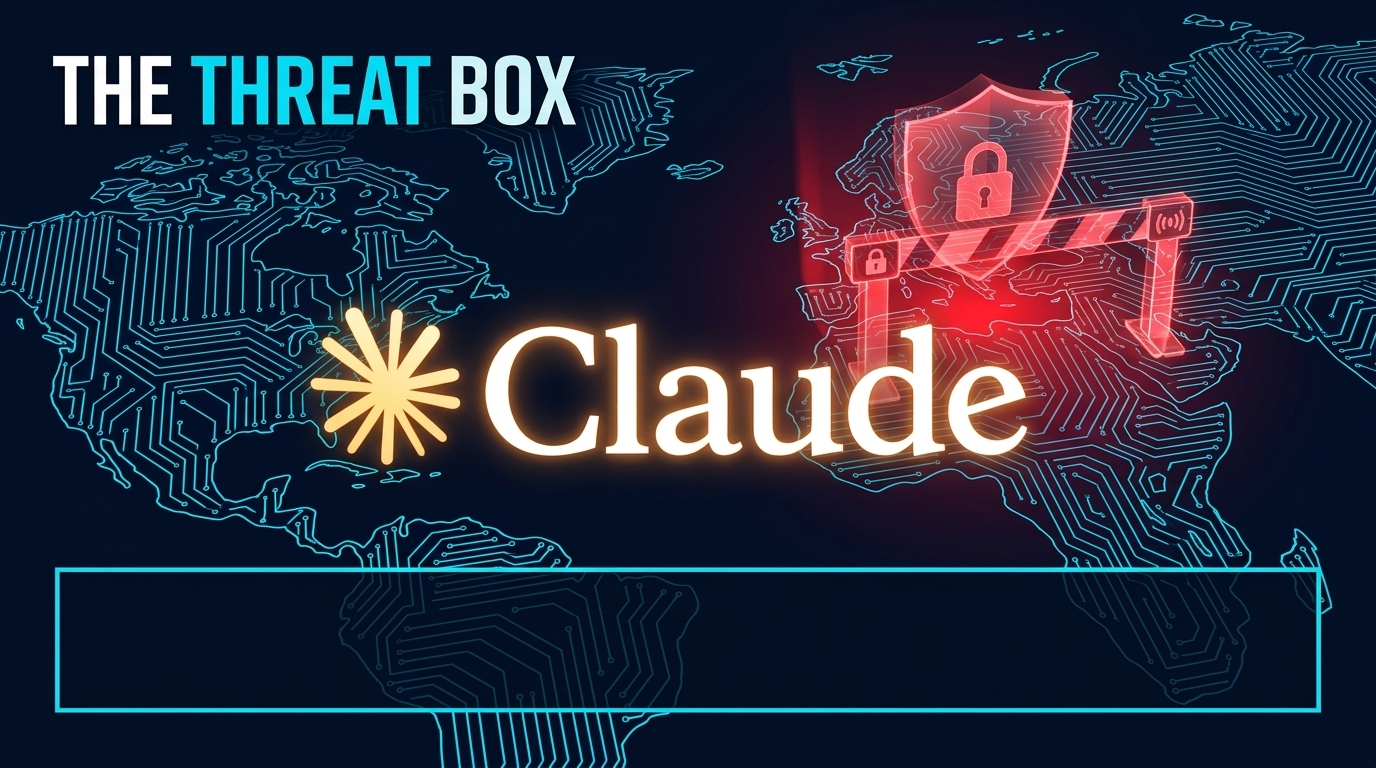
Anthropic has pulled its two most capable AI models offline for all users worldwide after the US government issued an unprecedented export control directive ordering the company to cut off access to them for all foreign nationals. The Anthropic AI export ban targets Fable 5 and Mythos 5, the newest models in Anthropic’s Claude lineup. It applies to foreign nationals both inside and outside the US, including Anthropic’s own non-American employees. Because the company had no practical way to separate domestic from foreign accounts on these two models, the only path to compliance was disabling both globally, for every customer, regardless of nationality.
What the US Export Directive Says
Anthropic says it received the order at 5:21 p.m. ET on June 12, 2026. The letter cites national security authorities and bars access to Fable 5 and Mythos 5 by any foreign national anywhere, including Anthropic’s own foreign national staff. The company says the export control directive arrived without written detail on the underlying national security concern, only a verbal description of how the models could allegedly be misused.
All other Anthropic models, including Claude Opus 4.8, remain fully available and were not named in the order.
The timing makes the suspension sting. Anthropic had only begun rolling out Fable 5 on June 9, free to Pro, Max, and Enterprise customers through June 22. A model handed to millions of users just three days earlier was offline for everyone within 72 hours.
On the developer side, Anthropic told integrators that new sessions would fall back to a customer’s default model or Opus 4.8, any active Fable 5 sessions would end with an error, and API requests targeting Fable 5 directly would fail outright. Developers were told to migrate workloads to other models in the meantime.
Fable 5 vs Mythos 5: Understanding the Two Models
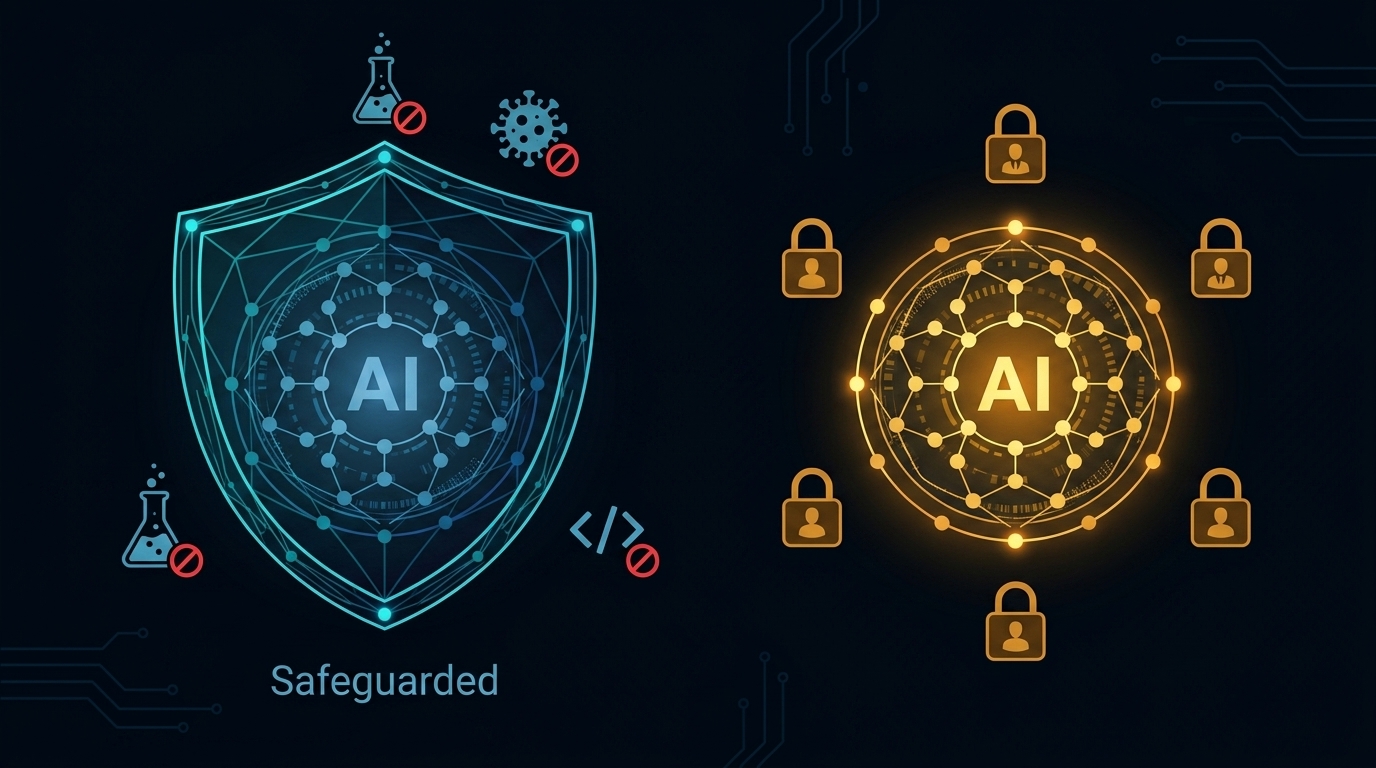
Understanding why these two models were singled out means understanding how they relate. Mythos 5 is Anthropic’s most capable underlying model and, by the company’s own description, is “strikingly capable” at security research, able to find and exploit software vulnerabilities faster than human experts. Anthropic has kept Mythos 5 access tightly restricted to a small set of vetted government cyberdefence teams and life sciences partners.
Fable 5 is the public-facing sibling, built on the same underlying model but wrapped in extra safeguards. It is designed to block or redirect prompts touching on sensitive cybersecurity, biology, or chemistry topics, while keeping most of the new model family’s general capability gains. Fable 5 was the version made broadly available to commercial customers this month, which is why its removal is being felt across the user base in a way Mythos 5’s restriction, limited to a handful of partners, never was.
Anthropic Disputes the Jailbreak Claim
Anthropic is complying with the order while publicly disputing its basis. The company says the government’s concern traces back to a reported jailbreak, a technique for getting an AI model to bypass its own safety guardrails. Anthropic says it reviewed a demonstration and found it amounted to little more than asking the model to read a specific codebase and flag or fix software flaws, essentially a routine code review task framed as an exploit.
The company says the demo surfaced only a handful of minor, previously known vulnerabilities, issues that other publicly available models, including OpenAI’s GPT-5.5, can already surface without any special workaround. Anthropic argues that treating a narrow, non-universal jailbreak as grounds for pulling a commercial model used by hundreds of millions of people would, if applied consistently, effectively freeze new model releases across the entire frontier AI industry. The company says it is working to restore access and expects to share more details within 24 hours.
The UK Responds to the Suspension
The fallout reached beyond US borders within hours. In the UK, Minister for AI and Online Safety Kanishka Narayan noted the suspension hit British customers just as hard as American ones, framing it as further justification for the UK’s own push toward computing and AI sovereignty, including its recently announced multi-billion pound investment in domestic AI chip capacity.
Canadian Impact: PIPEDA, CCCS, and the Push to Diversify
Canada’s reaction came from the top. Speaking to reporters in Ireland ahead of the G7 leaders’ summit in Evian les Bains, France, Prime Minister Mark Carney described the Fable 5 and Mythos 5 shutdown as a clear example of the risk of leaning too heavily on a small number of AI providers. He framed it less as anyone doing something wrong and more as a lesson Canada needs to act on: build redundancy and avoid depending on tools a foreign government can switch off overnight. Carney tied the episode to Canada’s broader push to diversify trade and technology partnerships away from the US, a goal that has taken on new urgency given that more than 70 percent of Canadian exports currently go to American markets.
For Canadian organizations, the practical lesson lands closer to home than international politics. Any business, government department, or critical infrastructure operator that had started building security workflows, code review pipelines, or vulnerability triage around Fable 5 woke up to find access could vanish with zero notice, not because of an outage or billing issue, but because of a foreign government’s directive, Canadian customers had no part in and no warning of.
This is precisely the kind of third-party and jurisdictional risk the Canadian Centre for Cyber Security (CCCS) has repeatedly flagged when advising federal departments and critical infrastructure operators on adopting generative AI tools: know your dependency chain, and do not assume continuity of access to any single foreign-hosted model. Organizations processing personal information through AI tools should also revisit their PIPEDA accountability obligations. While this incident is not a data breach, an abrupt, externally imposed service termination is exactly the kind of service continuity scenario data processing agreements and vendor risk assessments are meant to anticipate. Canadian businesses in finance, healthcare, and other regulated sectors that rely on frontier AI for security tooling should treat this as a prompt to document fallback models and contingency plans now, rather than after the next directive lands.
What This Means for the Global AI Industry
Industry watchers note this appears to be the first time the US government has used export control authority to restrict access to a large language model, a category that previously sat well outside traditional export controls like munitions or advanced semiconductors. The move also follows a broader White House executive order on AI that asks frontier labs to voluntarily share new models with advanced cyber capabilities with the government up to 30 days before wider release. Whether this directive becomes a one-off or the first of many will shape how predictable access to frontier AI tools remains for businesses and governments outside the US, Canada included.
Key Takeaways
- The US government ordered Anthropic to block all foreign nationals, including its own staff, from accessing Fable 5 and Mythos 5, citing national security authorities.
- Because Anthropic could not selectively block foreign users, it disabled both models worldwide for all customers, including Americans.
- Fable 5 had launched free to Pro, Max, and Enterprise users just three days earlier and was pulled within 72 hours.
- Anthropic disputes the rationale, saying the cited jailbreak amounts to a routine code review prompt that surfaced only minor, already known bugs.
- Other Anthropic models, including Claude Opus 4.8, remain unaffected and available.
- The UK and Canada both flagged the incident as evidence of the risks of overreliance on a small number of US AI providers.
- Canadian organizations using Fable 5 for security workflows should review vendor risk plans under CCCS guidance and PIPEDA accountability obligations.
What You Should Do Now
- Audit any workflows, scripts, or integrations that depend on Fable 5 or Mythos 5 and confirm they have failed over to Claude Opus 4.8 or another supported model.
- Log this incident in your vendor risk register as a real-world example of foreign government directive risk affecting AI tool availability.
- Review data processing agreements with AI vendors to confirm they address sudden, externally mandated service suspensions, especially where personal information is processed under PIPEDA.
- If your organization is a CCCS stakeholder or operates in a regulated sector, revisit guidance on AI tool dependency and confirm a documented fallback model exists for critical security functions.
- Monitor Anthropic’s developer status page and trust center for the promised follow-up details on this directive.
- Read The Threat Box’s guide to AI vendor risk assessment for a step-by-step framework that Canadian organizations can apply to any frontier AI tool.