Welcome back to The Threat Box. If your organization relies on Ghost CMS for its corporate blog, newsroom, or publishing platform, you need to pay close attention. A highly critical vulnerability is actively being exploited in the wild, turning otherwise reputable websites into delivery mechanisms for a sophisticated malware campaign known as ClickFix.
Cybersecurity researchers have uncovered a massive, large-scale operation exploiting a severe SQL injection flaw in Ghost CMS (tracked as CVE-2026-26980). This vulnerability has already compromised over 700 high-profile domains globally. From prestigious educational institutions like Harvard and Oxford universities to tech heavyweights like DuckDuckGo, the victims span multiple sectors.
For Canadian universities, SaaS companies, fintech startups, and media outlets utilizing Ghost CMS, the threat is knocking at the front door. Here is everything you need to know about how this attack works and what you must do to secure your network.
How the Ghost CMS Vulnerability (CVE-2026-26980) Works
At the heart of this widespread campaign is CVE-2026-26980, a critical SQL injection vulnerability impacting Ghost CMS versions 3.24.0 through 6.19.0.
A SQL injection occurs when malicious SQL statements are inserted into entry fields for execution. In this specific case, the flaw allows unauthenticated attackers to bypass security protocols and read arbitrary data directly from the website’s underlying database. Among the most sensitive data stolen in these breaches are the administrator API keys.
Once threat actors obtain an admin API key, they effectively hold the master keys to the castle. This level of access grants them the ability to manage users, alter site themes, and most importantly, modify published article pages without ever needing a standard username or password.
According to threat intelligence researchers at XLab, who first documented the sheer scale of the attacks, malicious actors are using these elevated privileges to silently inject malicious JavaScript code into legitimate articles. The situation has become so volatile that researchers at SentinelOne have observed multiple distinct threat actor groups actively targeting vulnerable Ghost sites. In a bizarre twist of digital turf wars, these competing hackers are sometimes re-infecting the same domains, cleaning out a rival’s malicious script only to inject their own.
The ClickFix Trap: Fake Cloudflare Prompts
The ultimate goal of compromising these Ghost CMS sites is to deploy a deceptive social engineering attack known as ClickFix. This tactic preys on the everyday friction of browsing the modern web, weaponizing a security feature we have all grown accustomed to: the human verification check.
When a reader visits a compromised article on an infected Canadian news site or university portal, the injected JavaScript acts as a lightweight loader. This loader silently reaches out to the attacker’s infrastructure to pull down a secondary “cloaking” script. This script is highly intelligent—it fingerprints the visitor’s browser and operating system to determine if they are a viable target (typically targeting Windows users).
If the visitor matches the target profile, the script overlays a fake Cloudflare verification prompt using an iframe on top of the article. It looks identical to the standard “Verify you are human” checks we see daily. However, instead of clicking a simple checkbox, the ClickFix page provides specific instructions. It asks the victim to copy a provided command and paste it directly into their Windows Command Prompt or PowerShell terminal.
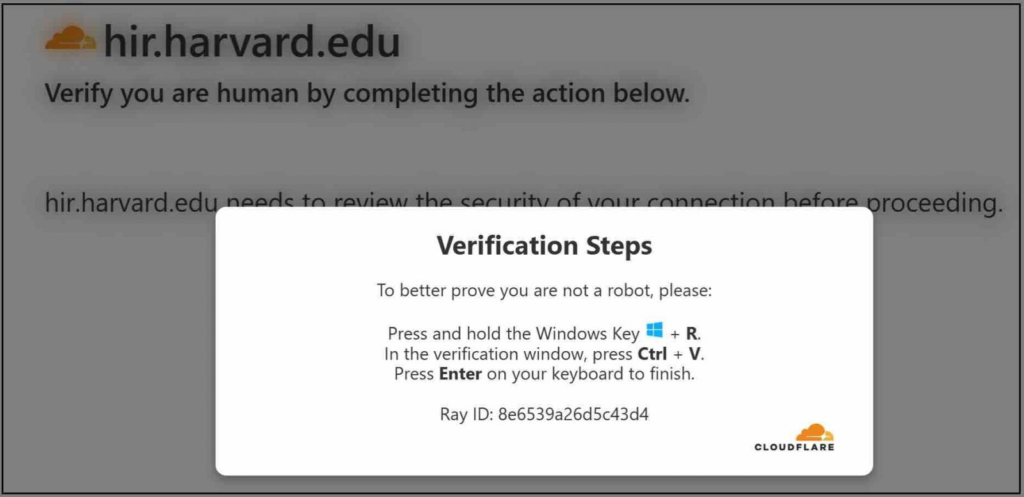
Figure: The ClickFix page
Source: XLab
By convincing the user to execute this command manually, the attackers easily bypass standard browser protections and antivirus warnings. Once the command runs, it drops a devastating payload onto the victim’s system. XLab has observed several different payloads being distributed, including stealthy DLL loaders, malicious JavaScript droppers, and a persistent Electron-based malware sample known as UtilifySetup.exe.
The Canadian Impact and Global Fallout
While international giants have made headlines for falling victim to this flaw, the Canadian cybersecurity landscape is far from immune. Ghost CMS is a widely popular alternative to WordPress, heavily favoured by Canadian independent media, university publishing arms, and fast-growing tech startups based out of hubs like Toronto, Vancouver, and Montreal.
When a Canadian organization’s website is compromised in this manner, the fallout extends beyond mere reputation damage. Under the Personal Information Protection and Electronic Documents Act (PIPEDA), organizations have a legal obligation to safeguard the data under their control. Because CVE-2026-26980 allows threat actors to read arbitrary database information, compromised sites may have silently leaked subscriber lists, internal user data, and hashed passwords before the ClickFix script was even deployed.
Furthermore, the Canadian Centre for Cyber Security (the Cyber Centre) continuously warns domestic businesses about the risks of unpatched content management systems. Serving malware to your own customers or students can severely damage digital trust, which is incredibly difficult to rebuild in today’s privacy-conscious market.
How to Defend Your Website and Network
The official fix for this severe vulnerability was actually released on February 19th in Ghost CMS version 6.19.1. Unfortunately, as is often the case in the cybersecurity world, a delayed patch management cycle has left hundreds of domains exposed weeks after the fix became available.
If you are a network administrator or website owner running Ghost CMS, immediate action is required to mitigate this risk:
- Update Immediately: Upgrade your Ghost CMS installation to version 6.19.1 or later without delay.
- Rotate All API Keys: Patching the software stops future theft, but it does not invalidate keys that have already been stolen. You must comprehensively rotate all admin API keys used previously.
- Audit Your Content: Conduct a thorough review of your published articles and site themes. Look for the Indicators of Compromise (IoCs) published by XLab and SentinelOne, particularly unauthorized JavaScript injections.
- Enable API Call Logging: Researchers strongly recommend that website owners maintain at least a 30-day record of administrative API call logs. This ensures you have the necessary telemetry to conduct a retrospective investigation if a breach is suspected.
Key Takeaways
- Critical Flaw: CVE-2026-26980 is a severe SQL injection vulnerability affecting Ghost CMS versions 3.24.0 through 6.19.0.
- Massive Scale: Over 700 domains, including high-profile universities and tech companies, have been compromised globally.
- Data Theft: The flaw allows attackers to steal Admin API keys, giving them the power to modify live articles.
- ClickFix Malware: Attackers inject scripts that display fake Cloudflare “human verification” prompts, tricking Windows users into running malicious commands that install malware like
UtilifySetup.exe. - Immediate Action Required: Administrators must update to version 6.19.1+, rotate all API keys immediately, and scrub existing articles for injected code.